“Man has innate feelings in his soul whose real-world objects can never satisfy; it is precisely these feelings that the imagination of the painter and poet knows how to give shape and life to… A certain impression arises from the arrangement of colors, lights, and shadows… One might call this the music of a painting. This emotion reaches into the most intimate part of the soul.”
Eugène Delacroix (1798–1863)
Henri Perruchot, Gauguin
Paris_EXPRESS is a research project exploring the sources of post-industrial culture located in the Parisian district of Montmartre.
Once a village, Montmartre gained its status as one of Paris’s most iconic districts as a result of the influx of artists. For decades, it attracted the artistic avant-garde and bohemian communities. Artists lived and worked in close proximity to working-class neighbourhoods, often occupying studios established in abandoned barns, workshops, and other spaces on the margins of the official city. They frequented bars and venues visited by workers, observing and portraying the everyday social life of ordinary people.
A closer look at the history of Montmartre reveals an inseparable relationship between art and everyday life. The industrial landscape, the rapidly changing structure of the city, the lives of its inhabitants, and the emerging entertainment and tourism industries all shaped the context in which painters, musicians, and poets created their work.
Paris, which would eventually become one of the world’s most important centres of culture and art, also built its position through the myth of the artistic bohemia. Cafés, cabarets, bars, studios,
and meeting places created an environment in which different social classes, ideas, experiences, and intoxicants came together — from absinthe to hashish and opium. These elements were part of the reality in which the culture of the turn of the nineteenth and twentieth centuries was formed.
Separating paintings, music, and literature from the context in which they were created would therefore be an oversimplification. Paris_EXPRESS attempts to enter the less obvious corners of Montmartre, examining its history, the transformation of its spaces, and the processes that have shaped the district’s contemporary image.
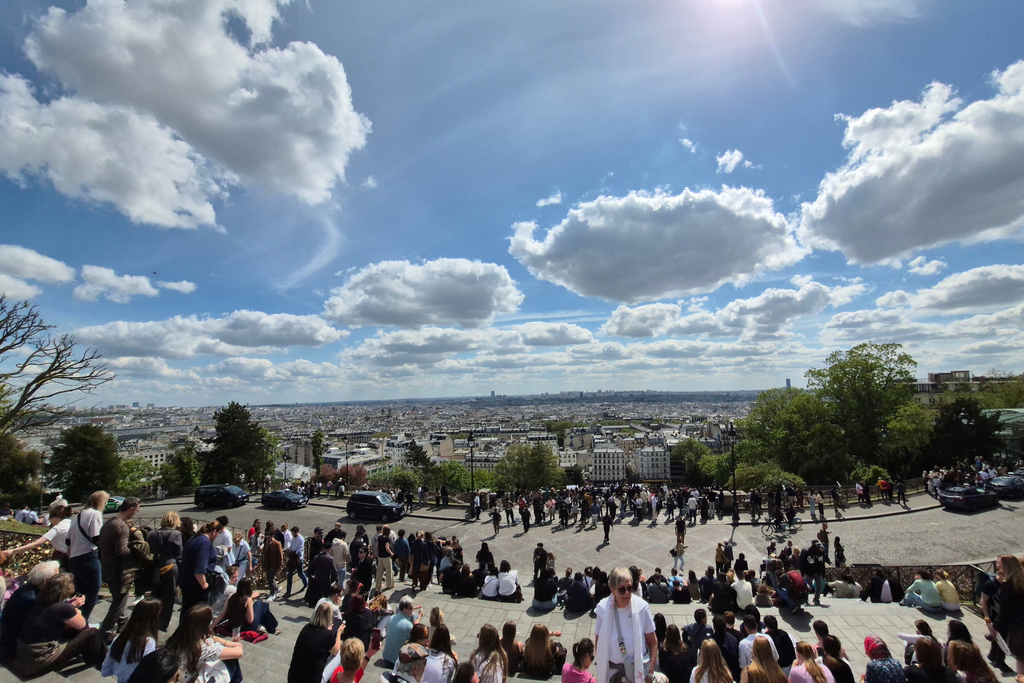
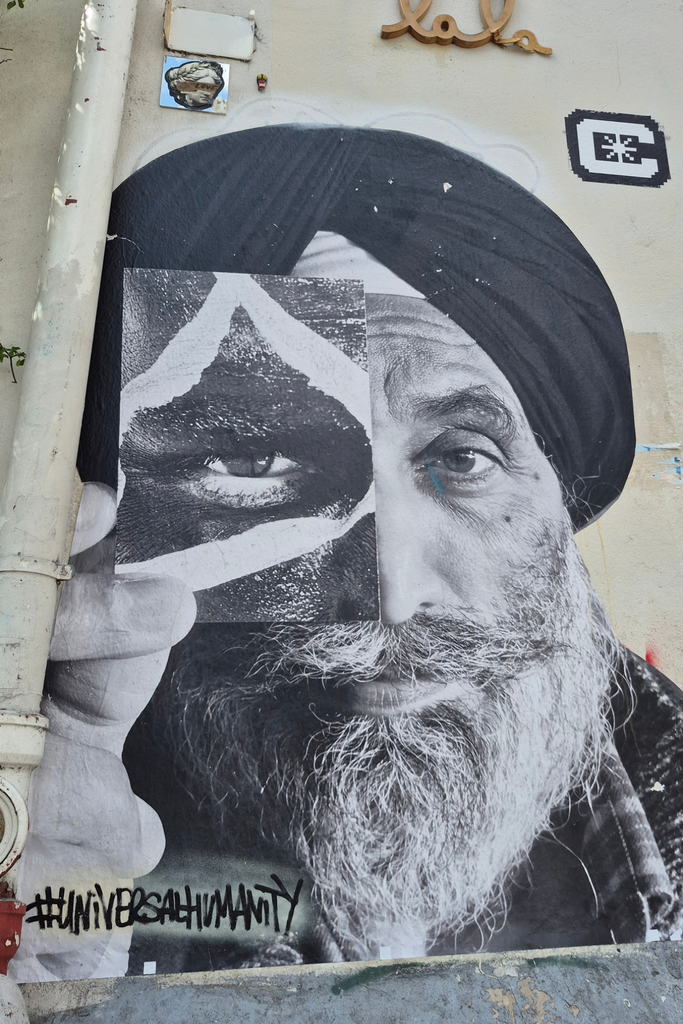
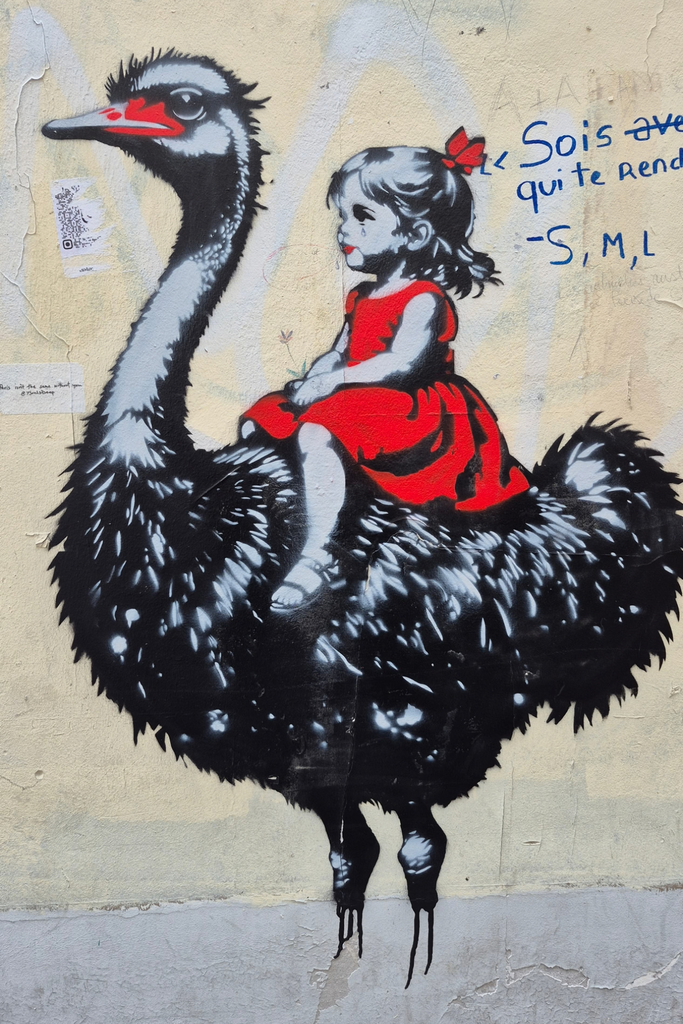
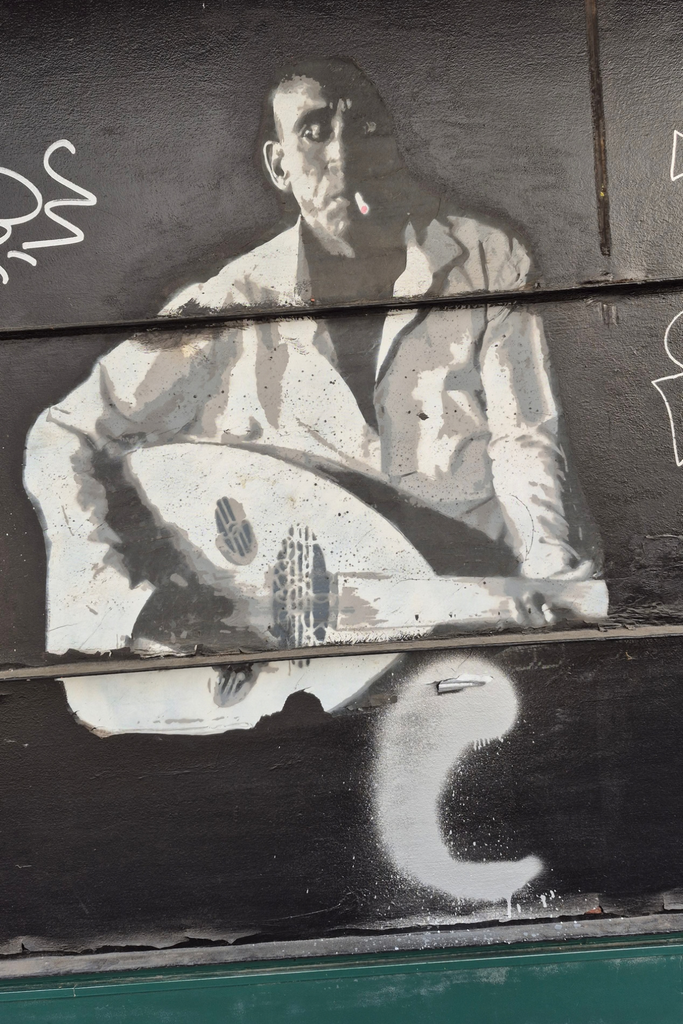
The project places historical Montmartre in dialogue with the present, using street art, gentrification, and the development of tourism as tools of observation and interpretation. It explores the tension between the physical place and its cultural representation — between a district once inhabited by workers, artists, and people living on the margins of society, and today’s space of global tourism, consumption, and the cultural branding of Paris.
Paris_EXPRESS is therefore an attempt to read Montmartre not as a finished myth, but as a living organism in which the past is constantly colliding with the present.
Foundation
Eugène Delacroix, a French painter of the Romantic era, is considered one of the forerunners of Expressionism. His artistic concepts and approach to colour influenced the work of Post-Impressionists, including Paul Gauguin, whose formal and colour experiments anticipated the emergence of this movement.
Delacroix emphasised that painters and poets possess the means to express inner experiences and emotions. Although he is credited with influencing the development of Impressionism, his artistic vision went beyond the principles of this movement, whose representatives focused on capturing fleeting visual impressions, exploring light and its effect on the perception of the form and colour of objects. The almost mathematically precise division of colours employed by Pointillists, led by Georges Seurat, brought about further transformations in painting and deepened divisions within the artistic community. Against this backdrop, Impressionism, once regarded as a revolutionary movement, gradually began to give way to new artistic explorations.
The generational shift that took place towards the end of the nineteenth century was largely associated with Gauguin’s rebellious attitude. The artist deliberately simplified and flattened painted forms, giving them bold outlines and intense, often unnatural colours. His work from the period he spent in Pont-Aven, Brittany, attracted the attention of Vincent van Gogh, who represented a different mode of expression characteristic of Northern European artists. Although the two painters employed different means of artistic expression, both contributed to expanding the boundaries of painting and paved the way for subsequent generations of artists.
Being a forerunner of Expressionism, a movement that took shape in the early twentieth century, meant influencing not only the development of painting but also other art forms. Expressionism inspired successive generations of painters, musicians and writers, placing individual experiences, emotions and subjective interpretations of reality at its centre.
The liberation of artistic expression, including through abstraction, became one of the driving forces behind later transformations in art, including the development of Postmodernism. The latter, challenging the idea of a unified and logical progression, readily embraced collage, quotation and the juxtaposition of different aesthetic frameworks. In this way, art increasingly moved away from the belief that it had to follow a single, predetermined path.
égalité
The ongoing industrialization of Europe set profound social transformations in motion, also contributing to the gradual democratization of culture. Exhibitions at the Paris Salon, which for years had shaped the direction of artistic development, attracted large crowds. Major exhibitions became mass-audience events, while the controversies surrounding disputes between academic painters and the Impressionists further fueled public interest in painting. They drew not only connoisseurs but also ordinary passersby, whose curiosity was aroused by artistic scandals and innovative works.
The potential of mass interest in images, and of the emotions they could evoke, was later harnessed by the developing film industry, particularly in the United States. Cinema opened up new opportunities for broad sections of the public to participate in cultural life. Through film screenings, even those who could not afford a visit to the theater could experience moving images. All that was needed was a projector and a screen, which, in the simplest circumstances, could be nothing more than a white bedsheet. Like painting before it, the image became a tool of mass communication, capable of capturing attention, stirring emotions, and transcending social barriers.
Charlie Chaplin, who masterfully portrayed characters resembling the people he had known during his childhood on the streets of south-east London, perfectly met the expectations of audiences who laughed at their own weaknesses, foibles, and everyday experiences.
Here we return to Delacroix’s concept, according to which the artist reaches out to the audience by expressing what its members are unable to articulate themselves because they lack the means to do so. Art thus becomes a mediator between individual experience and collective consciousness, allowing viewers to recognize themselves in the work.
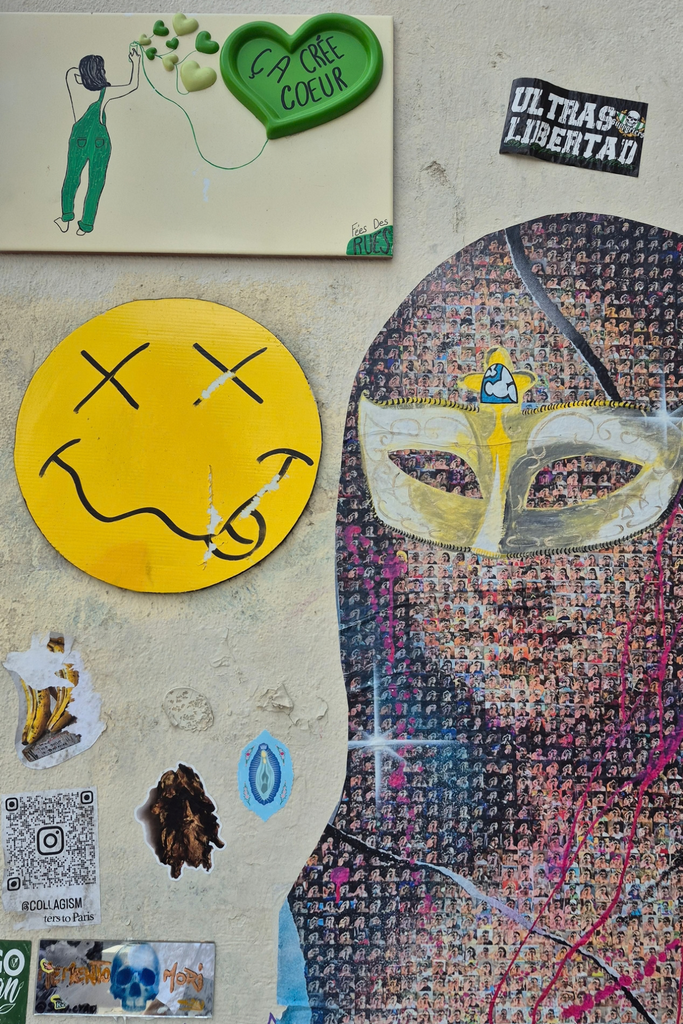
The democratization of art sparked a debate that continues to this day. The disputes concern both aesthetics and the form of expression, and one of their underlying causes is the ambiguity surrounding the very definition of art. What one viewer considers a masterpiece may appear to another to have no artistic value whatsoever.
A similar mechanism can be observed in the way information is received. Audiences interpret messages through the lens of their own experiences, beliefs, and needs, choosing the narratives they find most comprehensible or relatable. As a result, it is difficult today to speak of a single, universally accepted interpretation of reality. Instead of a universal narrative, we have multiple parallel ways of describing and understanding the world.
Matisse: The Power of Painting and Expression
To explore the notion of artistic expression in greater depth, the author decided to visit an exhibition organised by the Centre Pompidou at the Grand Palais in Paris, showcasing the work of Henri Matisse from 1941 to 1954.
Provocative in its simplicity and use of distortion, and characterised by bold, sometimes striking colour combinations, Matisse is one of the most celebrated painters of the twentieth century. Using simple tools such as scissors and coloured paper, he created forms whose apparent awkwardness evokes children’s scribbles. Yet behind this simplicity lies an extraordinary sense of composition and a mastery of technique. His work gradually evolved towards minimalism, where the reduction of artistic means becomes a source of exceptional expressive power.
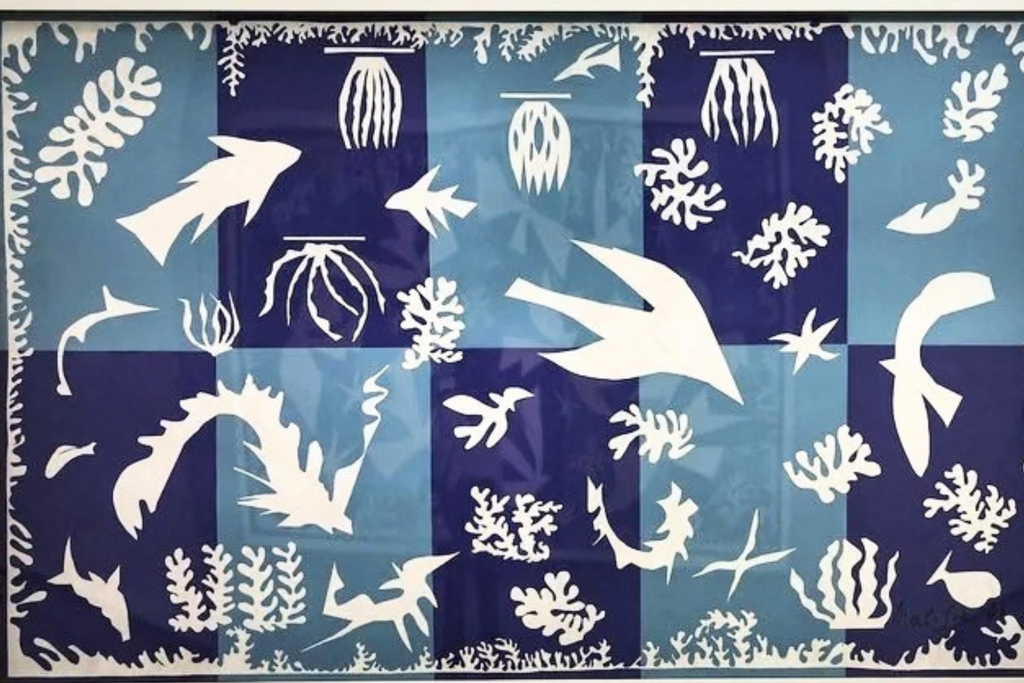
This extensive retrospective, featuring more than 300 works by the founder of Fauvism, focuses on the final thirteen years of his life and artistic career. Paintings, gouaches, drawings, book illustrations, textiles and stained-glass works reveal the artist’s versatility and the universality of his visual language. They demonstrate how adaptable a painterly language can be, serving as a starting point for the creation of new forms and the exploration of new expressive tools that extend beyond traditional painting into areas far removed from the conventional understanding of an image.
Matisse’s works are displayed to great effect throughout the Grand Palais. The limited number of visitors allows them to be contemplated in peace, without crowds. Encountering the originals reveals what reproductions cannot convey: the relationship between the weight and lightness of forms, the materiality of the surface and the freedom of the artistic gesture. It also offers insight into the process of constructing a composition that the artist considered perfect. At times, he achieved this not by adding further elements, but by subtracting, painting over or concealing parts of the surface. This creative process, grounded in a constant search for balance, is most fully revealed through direct engagement with the work itself.
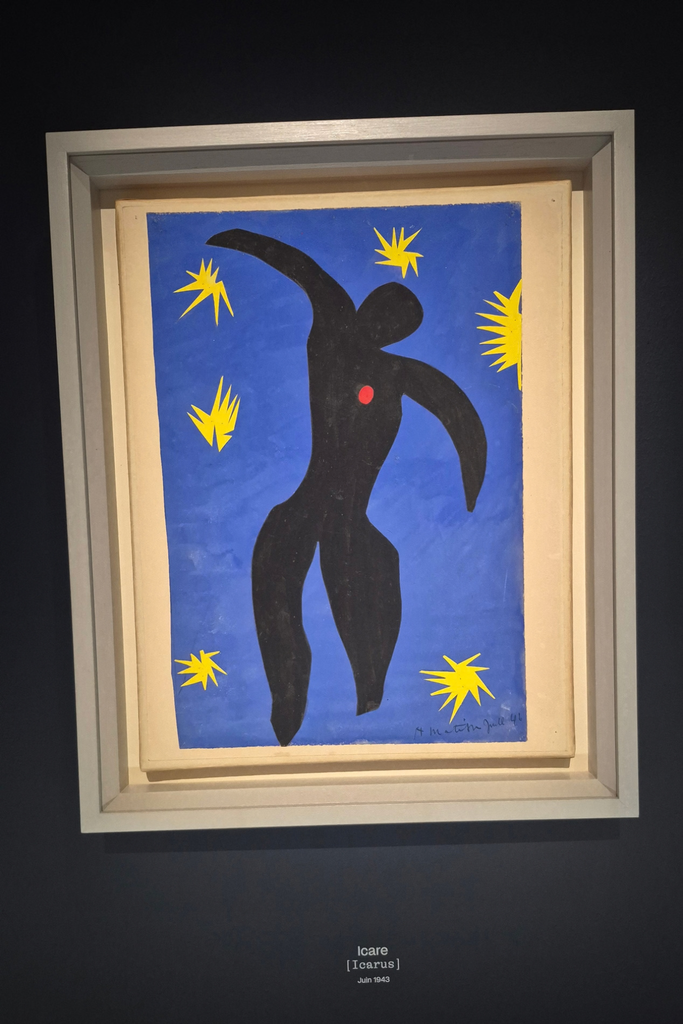
Some of the works come from the Centre Pompidou in Paris, which has closed to visitors for renovations expected to last five years. The remaining works by Matisse have been loaned by institutions around the world, including the Museum of Modern Art (MoMA) in New York, the National Gallery of Art in Washington, D.C., the Hammer Museum, the Barnes Foundation and Switzerland’s Fondation Beyeler. Bringing together such an extensive and diverse collection allows visitors to approach the artist’s work from multiple perspectives and trace the evolution of his visual language.
Experiencing the power of painting is incomparable to studying it in theory alone. It demonstrates the enduring power of art and its influence on the way we perceive the world. It also reminds us that culture is not merely an accessory to social life, but an essential component of a country’s economic development. In this context, it is worth considering the debate over extending social protection to artists. Their work does not always provide a regular income, yet it is artists who help shape our cultural heritage, which over time becomes a shared asset and a source of inspiration for future generations.
Paris began by creating spaces for artists on the city’s outskirts, particularly around Montmartre in the 18th arrondissement, and gradually built an extensive ecosystem around artistic activity. Works by artists who are now regarded as masters found their way into the collections of collectors and art dealers, but also into the hands of chance buyers. As a result, many of these works survived to inspire new generations. This history demonstrates that cultural development requires not only talent, but also space, patronage, a functioning art market and people willing to recognise value in what may not immediately receive recognition.
Paris attracts artists for reasons that go far beyond the Eiffel Tower, Notre-Dame Cathedral or the Louvre. Above all, it draws them through its history — dense with events, drama and intellectual debate. It is a city where great art exists alongside everyday life, philosophical discussions unfold over a glass of wine, and high culture continually collides with mass entertainment. This apparent contradiction is part of its strength. Paris remains a place where art is not confined to museum galleries, but permeates the life of the city, shaping its identity and collective imagination.
Morrison
One of the figures drawn to Paris by its magnetic charm was the lead singer of The Doors, for whom the French capital became the final chapter of his life. His remains lie in the Père-Lachaise Cemetery, where the tomb of Eugène Delacroix can also be found.
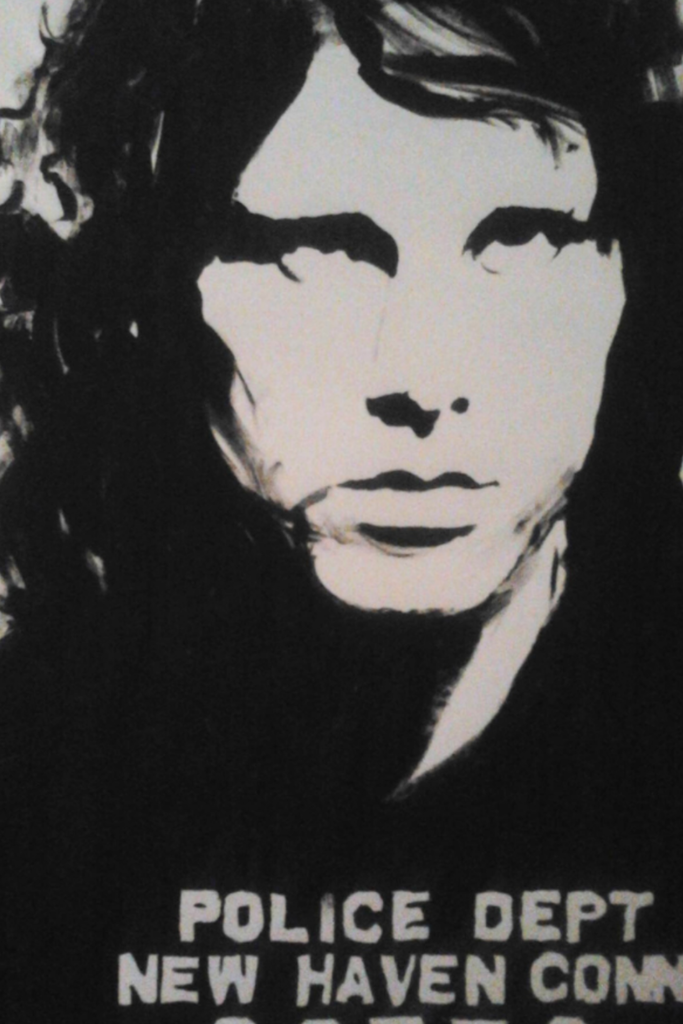
Jim Morrison, whose real name was James Douglas Morrison, officially died on July 3, 1971, in Paris, in a rented apartment he shared with his girlfriend, Pamela Courson.
He was burned out. Following the stage scandal of 1969, he wanted to step away from the media spotlight and devote himself to what truly fascinated him — poetry. Music served as a backdrop for his artistic visions. He used it as a vehicle for publishing his poems, drawing on his acting skills and sex appeal. After recording the album L.A. Woman, he left for Paris — the city where Oscar Wilde, Arthur Rimbaud, Charles Baudelaire, and Guillaume Apollinaire had created their work. He was drawn to the atmosphere of the artistic capital, its nightlife, and its surrealist character.
Accounts from people who met him during his several-month stay in the French capital paint a picture of a man heavily dependent on alcohol. A single drink was enough to get him drunk, even though the evening had barely begun. During that period, despite repeated attempts, no one was able to conduct a meaningful interview with him or involve him in any kind of project. Morrison slipped away every time, like an eel, igniting a fire and then leaving it in the care of those who were unable to keep it burning.
It is a fascinating phenomenon, though a fairly typical one among people endowed with powerful charisma. When they leave, they take everything they brought with them, leaving behind nothing but a mist that eventually dissipates.
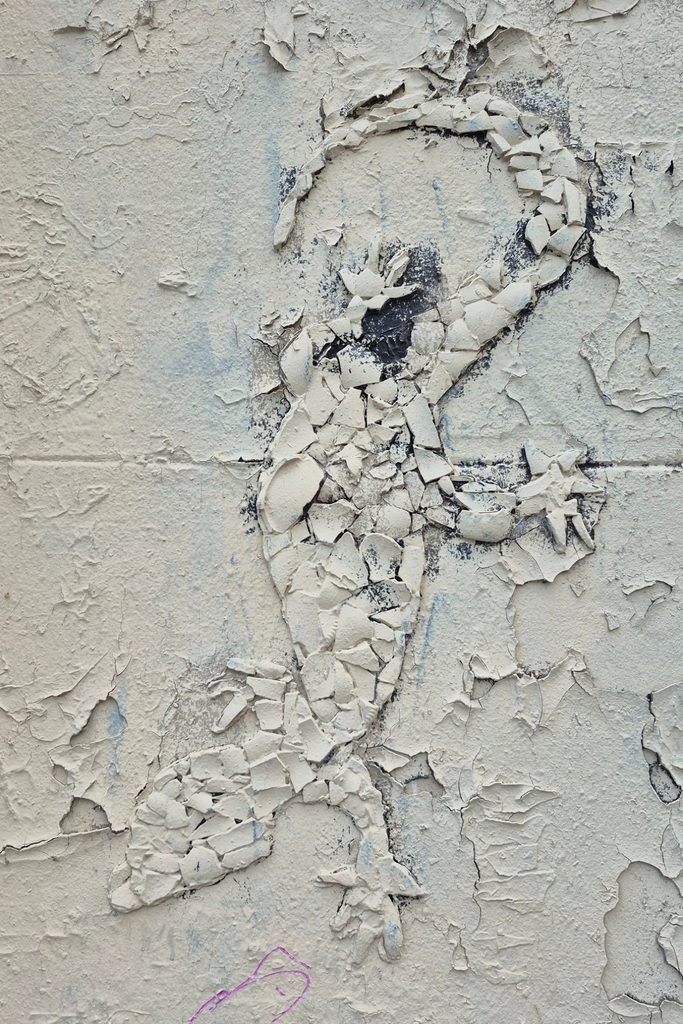
Paris today is a city just as difficult as it was in 1971. It attracts lost wanderers in search of inspiration and the energy of a nineteenth-century legend that had little to do with reality.
The stories of artists who rented studios on Montmartre hill and went on to revolutionize the art market are particularly evocative. Yet many of these tales can be reduced to ordinary circumstances. Barns and other buildings on the outskirts of Paris at the time were cheap to rent, and contact with sex workers and laborers living in the area was simply a natural part of everyday life. Reading this as some kind of deliberate strategy for discovering innovative subjects for painting seems like an exaggeration. Women who sold sexual services posed for their clients, some of whom were artists now widely known and celebrated.
It is worth noting, however, that while the areas around Place Pigalle and the Moulin Rouge were the natural habitat of Henri de Toulouse-Lautrec, Maurice Utrillo preferred to spend his time in squalid working-class bars and rarely ventured into the districts associated with Parisian bohemian nightlife.
To be continued…
*************************************************************************

Over the course of more than 30 years, the author has visited Paris several times, returning at different intervals. Each visit has allowed him to reassess his earlier impressions and see the city from a new perspective — through the lens of personal growth, social change, and phenomena characteristic of post-industrial culture.
To immerse himself once again in the spirit of the city, he stayed at a hotel in the heart of Montmartre. He revisited the streets and corners where he used to wander as a young man — back when he sometimes slept on cardboard and ate his meals in parks.
Returning to these places became more than just a journey. It was a confrontation with his own past, memories, and experiences. Seen through the eyes of someone returning after many years, Paris reveals a different face — both of the city itself and of the author, now carrying the weight of new experiences.
As a DJ, the author has maintained a lasting interest in club music. While packing his backpack for another journey, he turned to French Touch — a style of French electronic music that had a significant influence on the European club scene at the turn of the 1990s and 2000s.
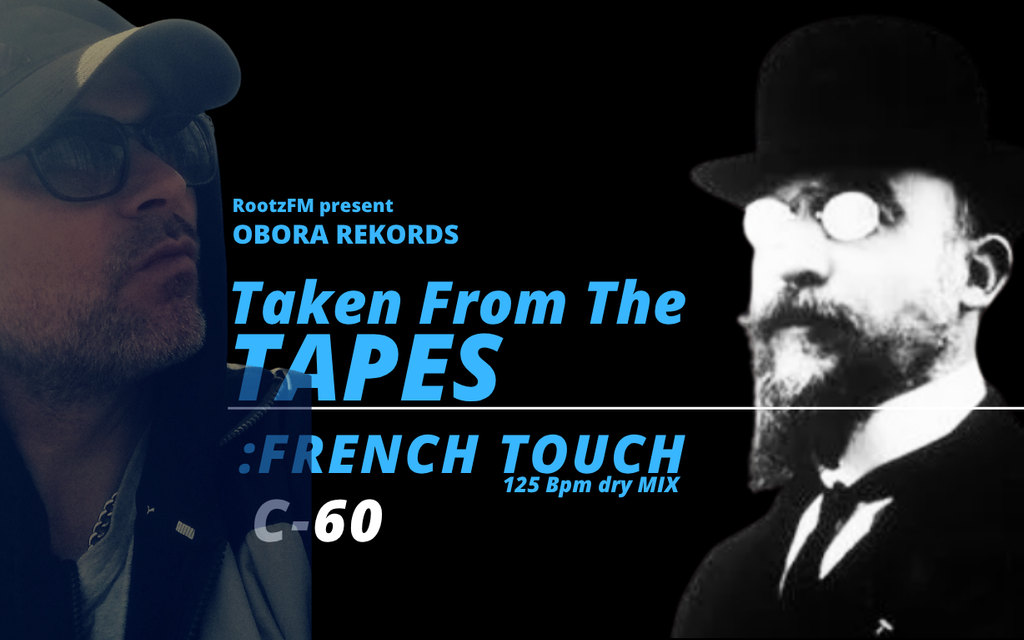
Inspired by these sounds, he also created a mix, available to listen to on YouTube. It serves as a musical companion to the journey — a return to French sounds, the energy of Paris, and rhythms that can evoke memories as vividly as places revisited after many years.
🎧 Listen to the mix on YouTube: https://www.youtube.com/watch?v=Id0ZztZev6s&list=RDId0ZztZev6s&start_radio=1&t=178s